Cartel Leader's Death Triggers Wave of Retaliatory Violence in Mexico
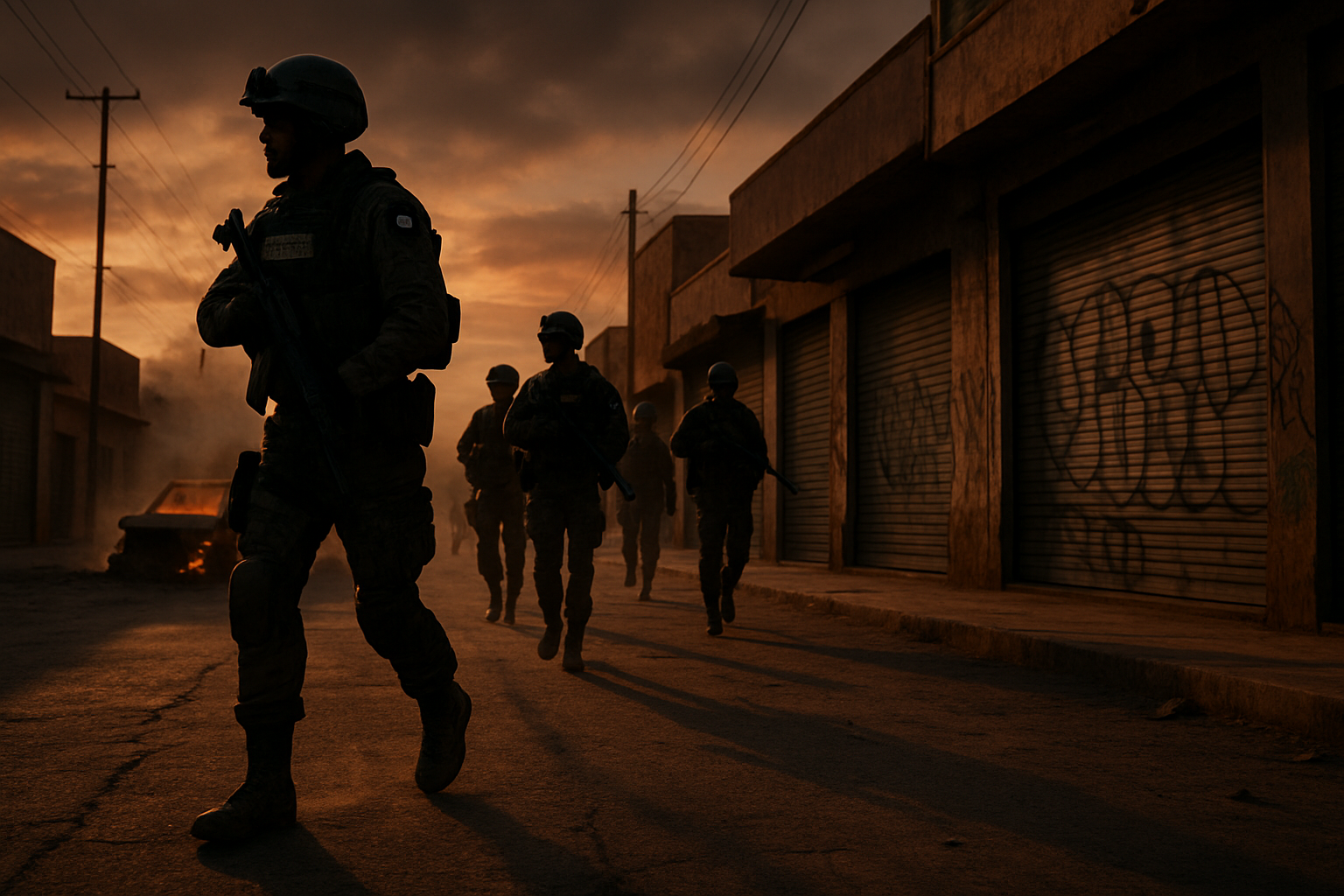
A reported cartel leadership killing in Mexico has allegedly set off coordinated retaliatory violence across contested states, according to security analysts. The fallout, sources suggest, could reshape criminal networks, disrupt trade, and strain U.S.-Mexico security cooperation for years.
**Mexico Cartel Violence Signals Deeper Structural Threat to Regional Stability**
When a dominant criminal organization loses its top leader, the consequences rarely end with that death. A senior figure within one of Mexico's major trafficking organizations — reportedly linked to operations in contested states including Sinaloa, Jalisco, and Tamaulipas — has allegedly been killed, according to regional security sources. The circumstances remain disputed: Mexican authorities have attributed the killing alternately to a rival faction or to state security forces, depending on the account reviewed. No official confirmation of the individual's identity or the precise location and timeline of the incident had been independently verified at the time of publication.
Security analysts warn the killing has triggered a succession crisis within the affected organization. Mid-level commanders — sometimes called *plaza bosses* — historically mobilize armed cells to secure territory before any successor consolidates power. The result, according to analysts familiar with prior cartel transitions, is a compounding period of violence targeting rival groups, civilians, local officials, and journalists alike.
Mexico's federal government under President Claudia Sheinbaum faces immediate pressure to contain the fallout. Her administration's security posture, described by analysts and opposition critics as combining targeted enforcement with attempts at reduced confrontation, has drawn scrutiny over potential enforcement gaps that rival factions reportedly exploit during leadership transitions. Government officials have reportedly deployed additional National Guard units to affected states, though the scale and duration of the deployment could not be independently confirmed. Mexico's Secretaría de Seguridad y Protección Ciudadana (SSPC) had not issued a formal statement on deployments at the time of writing.
The broader implications extend well beyond Mexico's borders. The United States, which shares a nearly 2,000-mile border with Mexico, depends on bilateral security frameworks — including intelligence-sharing arrangements under programs succeeding the original Mérida Initiative, now operating under the Bicentennial Framework signed in 2021 — to counter drug trafficking and synthetic opioid smuggling. A destabilized cartel landscape, analysts suggest, risks fracturing known criminal networks into smaller, less predictable cells that are harder for U.S. Drug Enforcement Administration (DEA) and Mexican intelligence units to monitor.
For Central American nations, the ripple effects could be severe. Drug trafficking corridors passing through Guatemala, Honduras, and El Salvador are largely regulated — formally or otherwise — by dominant Mexican cartel structures. When those structures fracture, trafficking routes become contested. Local criminal organizations, including MS-13 and Barrio 18, have historically expanded their influence to fill such voids, according to reporting by InSight Crime, a research organization specializing in organized crime in Latin America.
International trade is also at risk. Mexico is the United States' largest trading partner, with bilateral trade reportedly exceeding $800 billion annually in recent years, according to U.S. Census Bureau data. Key supply chain corridors in northern Mexico — including manufacturing hubs in Chihuahua and Nuevo León, home to major automotive and electronics suppliers — overlap directly with contested cartel territory. Business associations in the region have previously documented increased private security expenditures among foreign manufacturers during prior cartel conflicts, sources suggest.
Human rights organizations, including Mexico's own National Human Rights Commission (CNDH) and international bodies such as Amnesty International, have consistently documented patterns in which cartel succession violence disproportionately affects Indigenous communities, agricultural workers, and migrants. Displacement and internal migration typically accelerate during such periods, placing strain on already underfunded humanitarian infrastructure, according to CNDH reports.
The United Nations Office on Drugs and Crime (UNODC) has long cautioned that eliminating individual cartel leaders — a strategy sometimes called *kingpin targeting* — tends to fragment rather than eliminate criminal organizations. In its most recent World Drug Report, the UNODC noted that leadership vacuums historically produce multiple competing factions that collectively generate more violence than the original hierarchy. This structural pattern, analysts say, suggests the current reported instability may represent months of disruption rather than a short-term crisis.
Fentanyl remains the most urgent concern for North American authorities. The synthetic opioid, responsible for tens of thousands of overdose deaths annually across the United States and Canada, flows predominantly through networks reportedly tied to the Sinaloa Cartel and the Jalisco New Generation Cartel (CJNG), according to the DEA's most recently published National Drug Threat Assessment. A period of cartel realignment, sources suggest, creates both enforcement gaps and potential new trafficking alliances that anti-narcotics agencies in the U.S., Canada, and Europe will need to identify and counter.
What unfolds in Mexico's criminal underworld over the coming months will, according to analysts, quietly determine the shape of drug markets, migration patterns, and border security policy across the Western Hemisphere.